Mould Inspection Geelong
Professional mould and moisture inspections for homes, rental properties and businesses across Geelong and surrounding suburbs. Our experienced IICRC-certified technicians help identify visible mould, hidden moisture and conditions contributing to mould growth.
Professional Mould & Moisture Assessments for Geelong Properties
Visible mould, persistent musty odours or damp patches that keep returning can indicate an underlying moisture problem that deserves closer investigation.
Rapid Dry Restoration Geelong provides professional mould inspection services in Geelong for homes, rental properties, workplaces and commercial buildings throughout Geelong and surrounding suburbs.
Our IICRC-certified technicians look beyond what is visible on the surface. We assess accessible areas for mould, water damage and moisture-related conditions, using professional moisture-detection equipment and thermal imaging where appropriate.
Our aim is to understand the conditions affecting your property, identify likely contributing moisture sources and explain the most practical next steps.
Whether your concern followed a roof leak, burst pipe, flooding, wet carpet, bathroom leak, condensation or an unexplained damp smell, an early mould and moisture assessment can help you make an informed decision before the problem becomes more extensive.
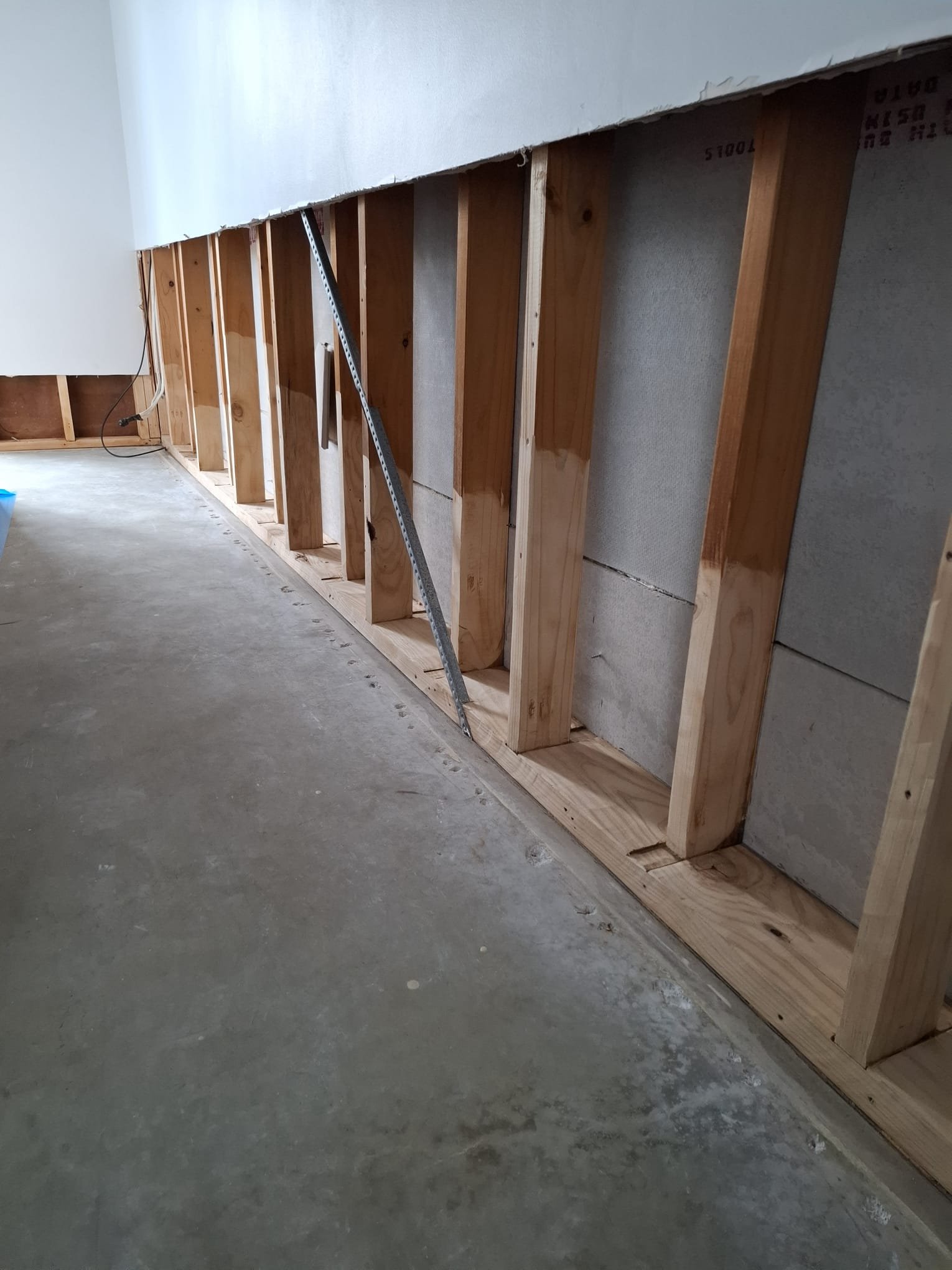
Industry Experience
What Is a Professional Mould Inspection?
A professional mould inspection is a structured assessment of visible mould, moisture conditions and the circumstances that may be contributing to mould growth within a property.
It involves more than looking at a discoloured wall or ceiling. A useful inspection considers where moisture may be entering or accumulating, which accessible materials appear affected, whether there are signs that the issue extends beyond the immediately visible area, and what should be considered next.
Understanding the Moisture Source
Mould spores occur naturally in indoor and outdoor environments. Problems can develop when moisture remains on suitable materials for long enough to support growth.
Our inspection considers possible contributing factors such as plumbing leaks, roof leaks, previous flooding, trapped moisture, condensation and inadequate ventilation.
Victorian Government mould information ↗Assessing Materials & Visible Conditions
Plasterboard, timber, carpet, underlay, insulation and other porous materials can be affected when moisture persists.
During a mould assessment, our technician examines relevant accessible areas for visible mould, staining, deterioration, water damage and other moisture-related indicators.
Professional Moisture Investigation
We begin by discussing what you have noticed and any history of leaks, flooding or previous water damage. Suitable professional moisture-detection equipment may then be used to assess relevant materials and conditions.
Thermal imaging may also be used where appropriate to identify patterns that warrant closer moisture investigation. Thermal imaging itself does not confirm the presence of mould.
Clear Findings & Appropriate Next Steps
Inspection findings can help determine whether moisture management, further investigation, drying, building repairs or professional mould remediation in Geelong should be considered.
Laboratory sampling, destructive investigation and specialised indoor environmental testing are not automatically included in a standard visual and moisture assessment.
When Specialist Testing May Be Required
If you require mould testing or documentation for an insurance matter, property transaction, legal dispute, specialised indoor environmental assessment or post-remediation verification, advise us before the inspection. This allows the appropriate scope to be discussed and, where necessary, an independent specialist to be considered.
Signs You May Need a Mould Inspection
Mould is not always immediately visible. In some properties, the first warning may be a musty smell, recurring condensation, water staining or changes to materials around an area that has previously been wet.
A professional mould and moisture assessment can help identify conditions that require closer investigation before the issue becomes more extensive.
Mould colour or surface appearance cannot reliably tell you the species, extent or underlying moisture source.
Visible or Recurring Mould
Black, green, white, grey or other discoloured spotting on walls, ceilings, window frames, grout, timber or furnishings may indicate mould growth.
If mould repeatedly returns after cleaning, an unresolved moisture condition may still be contributing to the problem.
Musty Odours & Hidden Dampness
A persistent musty or earthy smell without an obvious source can be associated with damp materials or mould that is not immediately visible.
Areas around wardrobes, cabinetry, carpet edges, flooring and rooms with limited airflow may require further investigation.
Water Damage, Leaks or Wet Materials
Water staining, bubbling paint, swollen skirting boards, softened plasterboard, lifting flooring or damp carpet can indicate current or previous water intrusion.
Water may travel beneath flooring and into wall systems, meaning surrounding materials can require assessment even when the surface appears dry.
Condensation, Poor Airflow & Building Changes
Regular condensation on windows and other cold surfaces can indicate excessive indoor moisture, particularly in bedrooms, bathrooms, laundries and poorly ventilated rooms.
Renovations may also expose previously concealed staining, damp materials or suspected mould that should be assessed before additional work continues.
Victorian health guidance identifies dampness and inadequate ventilation as important conditions associated with indoor mould. Addressing the underlying moisture source is an important part of reducing recurring mould growth. Victorian Government mould guidance ↗
Our Mould Inspection Process in Geelong
Every property is different. Our mould inspection process is tailored to the concern reported, the building conditions and the areas that can be safely accessed during the assessment.
Initial Discussion & Property History
We begin by discussing what you have seen, smelled or noticed and when the issue first appeared.
- Previous leaks, flooding or storm damage
- Plumbing or condensation concerns
- Recent repairs or building work
- Previous mould cleaning or treatment
Visual Inspection of Accessible Areas
Relevant accessible areas are examined for visible mould, water staining, condensation and material deterioration.
- Walls, ceilings and skirting boards
- Flooring and adjoining surfaces
- Signs of current or previous water movement
- Areas connected to possible moisture pathways
Moisture Detection & Thermal Imaging
Professional equipment may be used to investigate moisture conditions and identify areas that deserve closer attention.
- Moisture readings compared across materials
- Assessment around walls, flooring and skirting
- Thermal imaging used where appropriate
- Results interpreted alongside visual findings
Findings, Contributing Conditions & Next Steps
We consider the inspection findings, moisture conditions and property history together before explaining the practical options available.
- Addressing a leak or water source
- Improving drying or ventilation
- Further investigation of concealed areas
- Professional mould remediation where appropriate
Need specialist testing or documentation? Laboratory sampling, destructive investigation, formal reporting and independent post-remediation verification are not automatically included in a standard mould inspection. If these services are required for an insurance matter, legal issue, property transaction or specialist assessment, please advise us before the appointment so the appropriate scope can be discussed.
Can You Find Hidden Mould?
A professional mould inspection can help identify signs that moisture or mould-related conditions may extend beyond what is immediately visible. However, no non-invasive inspection can guarantee that every concealed area will be located.
Wall cavities, sealed flooring systems, insulation, cabinetry, roof spaces and subfloor areas can limit what can be confirmed without additional access. For this reason, a useful assessment considers several forms of evidence rather than relying on one device or a visual check alone.
Our technicians may use professional moisture meters, thermal imaging where appropriate, visible building indicators and the history of leaks or water damage to help narrow down areas that may require closer investigation.
Elevated moisture near a skirting board below a bathroom, temperature variation around a ceiling stain or deterioration beside a window may indicate that more targeted investigation should be considered.
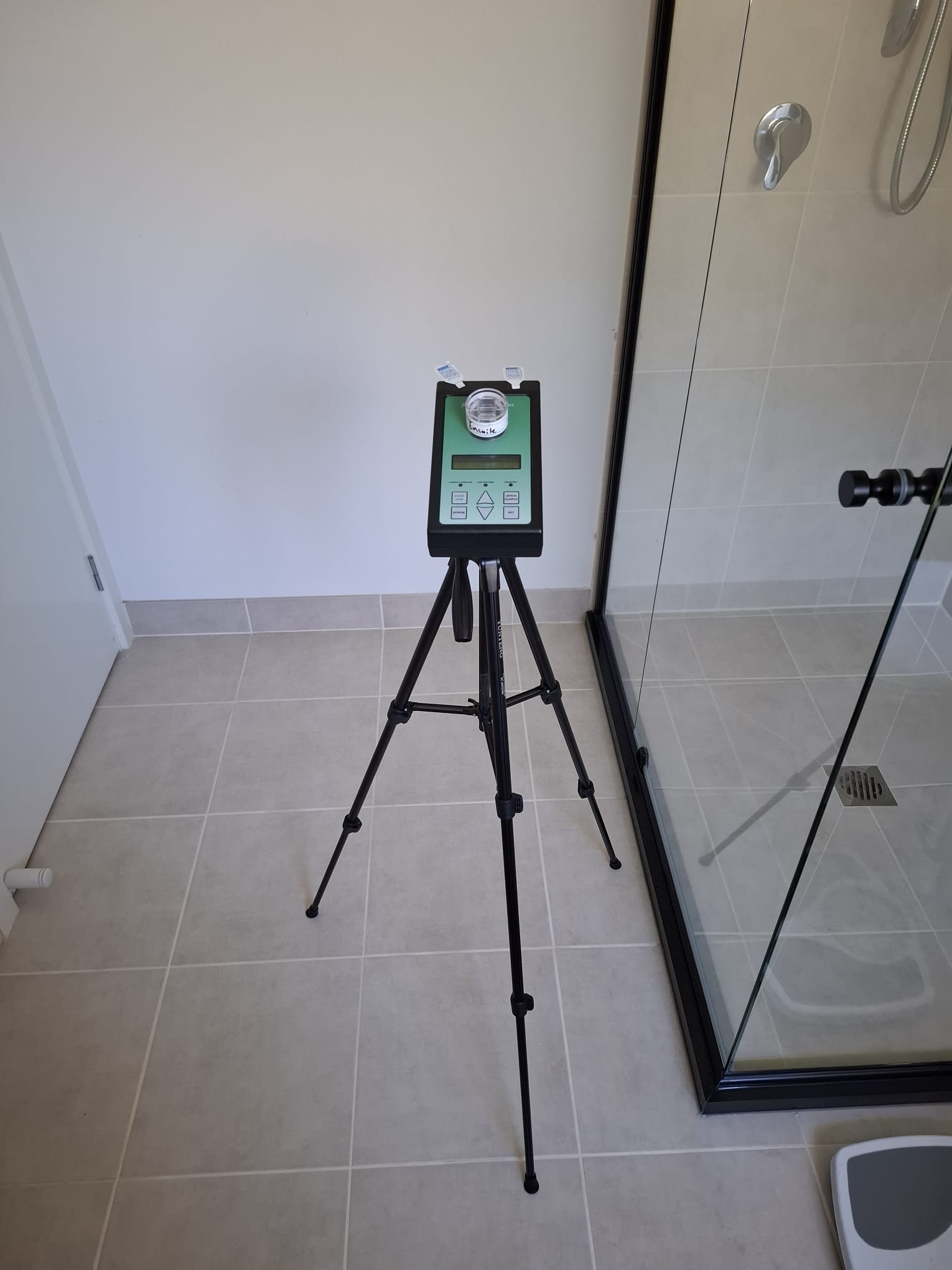
Professional Moisture Meters
Moisture meters can help compare materials and identify readings that deserve closer attention. Results need to be interpreted in context because different materials and building features can affect readings.
Thermal Imaging
Thermal cameras display surface temperature patterns. They do not photograph mould behind walls and do not independently confirm that hidden mould or moisture is present.
Access & Inspection Limitations
If an area cannot be inspected safely without disturbing building materials, we explain the limitation and whether further access or specialist assessment should be considered.
Mould Inspection, Mould Testing and Mould Remediation: What Is the Difference?
Mould inspection, testing and remediation are related services, but they serve different purposes. Understanding the difference can help you choose the most appropriate next step for your property.
Mould Inspection & Assessment
A mould inspection gathers information about visible conditions, affected materials, moisture patterns and the property history.
The purpose is to understand the problem, identify likely contributing moisture conditions and determine whether further investigation, drying, repairs or remediation should be considered.
Mould Testing
Mould testing may involve air, surface, dust or material samples analysed by an appropriate laboratory. Testing can be useful where identification, documentation or independent evidence is required.
Testing is not automatically necessary in every situation. Where visible mould and the moisture source are already apparent, sampling may provide limited additional value unless it is answering a specific question.
Mould Remediation
Mould remediation is the controlled treatment, cleaning or removal of mould-affected materials and contamination.
Depending on the conditions found, remediation may involve containment, HEPA-filtered air management, detailed cleaning, removal of unsalvageable porous materials and controlled drying of affected areas.
Learn about Mould Remediation Geelong →Independent Assessment & Verification
Some insurance, legal, commercial or complex remediation projects may require independent assessment, laboratory testing or post-remediation verification.
In these situations, the assessor or verifier may need to be independent from the company carrying out the remediation. Any such requirement should be established before work begins.
Looking Specifically for Mould Testing in Geelong?
Rapid Dry Restoration's standard mould inspection should not be assumed to include laboratory sampling or independent environmental testing. If mould testing is required for an insurance claim, legal matter, property transaction or post-remediation verification, explain the purpose when enquiring so the appropriate scope can be discussed.
Areas We Service Across Geelong
Rapid Dry Restoration Geelong provides professional carpet cleaning, flood restoration and water damage services across Geelong and surrounding suburbs. Explore some of our key service areas below.
Looking for another Geelong suburb? Explore our complete service-area coverage.
View All Areas We Service →Why Choose Rapid Dry Restoration Geelong?
Professional mould inspection requires more than identifying a visible mark. Our approach combines local restoration experience, moisture-focused assessment, professional equipment and clear communication to help you understand the conditions affecting your property.
Local Geelong Experience
Rapid Dry Restoration is locally operated and serves Geelong and surrounding areas. Our team brings extensive hands-on experience across carpet cleaning, water damage restoration, structural drying and mould-related restoration work.
About Rapid Dry Restoration →IICRC-Certified Technicians
Our technicians apply professional restoration knowledge when assessing moisture, water-damaged materials and mould-affected areas. This supports a structured approach to inspection, drying and remediation decisions.
ANSI/IICRC S520 Standard ↗Moisture-Focused Assessment
Recurring mould is often associated with unresolved moisture. We consider the history of leaks or water damage, affected materials, moisture readings and other contributing conditions rather than relying only on surface appearance.
Professional Inspection Equipment
Depending on the inspection scope, professional moisture meters and thermal imaging may be used to support the visual assessment. Where restoration is required, suitable extraction, drying and HEPA-filtered equipment can also be used.
Water Damage Restoration Geelong →Clear, Practical Communication
We explain what was observed, what cannot be confirmed without further investigation and what practical steps may follow. Recommendations are based on the conditions found at the property rather than a one-size-fits-all treatment.
Emergency Restoration Support
Active leaks and flooding should be addressed promptly. Make personal safety the priority, stop the water source only when it is safe to do so, and arrange the appropriate emergency trade where required before restoration work proceeds.
Flood Restoration Geelong →Frequently Asked Questions About Mould Inspection in Geelong
Find straightforward answers about mould inspections, testing, hidden moisture, thermal imaging and what happens when mould is identified at a Geelong property.
How much does a mould inspection in Geelong cost?
The cost depends on the property size, number of areas requiring assessment, accessibility, history of water damage and whether additional testing or documentation is required.
Call 0488 042 391 or email info@rapiddryrestoration.com.au with a brief description of the issue and photographs where available. We can then discuss the appropriate inspection scope and pricing.
How long does a mould inspection take?
Inspection time varies according to the size of the property, number of affected areas, accessibility and complexity of the moisture problem.
Assessing one accessible area is different from investigating several rooms or a commercial building. We can provide a more useful indication after discussing the property and areas of concern.
Do I need mould testing if I can already see mould?
Not necessarily. When visible mould and the contributing moisture source are already apparent, the priority may be to correct the water or dampness problem and determine an appropriate remediation scope.
Laboratory testing can be useful when a specific question requires identification, sampling or independent documentation. If testing is important to your situation, explain why when arranging the inspection so the correct scope can be discussed.
Can you identify black mould by looking at it?
No. Colour alone cannot reliably identify the genus or species of mould. The term “black mould” is commonly used to describe dark-coloured growth, but appearance is not a laboratory identification.
Where specific identification is genuinely required, suitable sampling and laboratory analysis may be necessary. Regardless of colour, visible mould and the moisture conditions contributing to it should be assessed appropriately.
Can thermal imaging see mould behind a wall?
No. A thermal camera displays differences in surface temperature. It does not see through walls and cannot identify mould by itself.
Thermal imaging may help identify temperature patterns that deserve closer investigation. Those observations should be interpreted alongside visual evidence, moisture readings and the history of the property.
Will you find every area of hidden mould?
No non-invasive inspection can guarantee that every concealed mould-affected area will be located. Wall cavities, sealed flooring, insulation, cabinetry and other inaccessible building areas can limit what can be confirmed.
We explain the visible findings, instrument readings and inspection limitations and can recommend more targeted investigation where the evidence suggests it may be appropriate.
What happens if the inspection finds mould?
The appropriate next step depends on the moisture source, extent of the affected area and the materials involved. Recommendations may include repairing a leak, improving drying or ventilation, investigating concealed areas, specialist testing or professional remediation.
Where suitable, Rapid Dry Restoration can provide a separate scope for professional mould remediation in Geelong .
Do you inspect rental and strata properties?
Yes. We assist property owners, tenants, property managers and strata representatives with mould and moisture concerns in accessible areas.
Let us know before the inspection if particular photographs, notes, access arrangements or documentation are required. Rapid Dry provides restoration and moisture-assessment services rather than legal opinions about liability or tenancy obligations.
For Victorian rental responsibilities, refer to Consumer Affairs Victoria's mould and damp guidance .
What Geelong Customers Say About Rapid Dry Restoration
Customer feedback reflects the professionalism, communication, attention to detail and restoration results experienced by people who have used Rapid Dry Restoration Geelong.
Natasha Talarico
Google ReviewNatasha highlighted the team's ability to accommodate her at short notice, describing Gerry as friendly and professional and praising the excellent carpet-cleaning results and attention to detail.
Debra Cairns
Google ReviewDebra described the service as prompt and professional and was particularly impressed with how much better her carpet looked after the work was completed.
Green Beryl
Google ReviewA repeat customer, Green Beryl praised Gerry's work on challenging end-of-lease carpet cleaning involving widespread pet urine, noting how clean and fresh the property smelled afterwards.
Brandon Aird
Google ReviewBrandon was extremely impressed with the carpet-cleaning result and described Gerry as polite and hardworking, adding that he would confidently recommend Rapid Dry to others.
Jorja Trofin
Google ReviewJorja praised Gerry's friendly and efficient service after carpets affected while caring for a dog were restored beyond what she had expected.
Jayrol Tomas
Google ReviewJayrol praised Peter's cleaning work and Gerry's organisation, noting clear communication, a hassle-free experience and the team's willingness to accommodate a short-notice booking.
Review highlights above are concise summaries of publicly available Google customer feedback. Visit our Google Business Profile to read the original reviews.
Read All Google Reviews ↗