Moisture Readings
Geelong
Understand what is still wet.
Make the next step clearer.
Professional moisture testing for water-affected walls, floors and building materials. Helping Geelong homeowners and businesses make informed decisions about drying and restoration.
Moisture testing for a clearer picture of water damage
Moisture readings help assess the condition of building materials after a leak, flood or other water incident. They can indicate where further investigation or drying is needed.
A carpet can feel dry while the underlay remains damp. A wall may look better after cleaning even though the surrounding materials still need attention. Appearance alone does not explain the full extent of a water event.
Rapid Dry Restoration Geelong provides moisture assessment as part of our local restoration services. We consider the history of the problem, visible conditions and accessible affected materials to help guide the next practical steps.
If water extraction or drying is also required, explore our water damage restoration services in Geelong.
What can moisture readings help assess?
The scope depends on the water event, building materials and safe access. These are common areas of concern when arranging moisture testing in Geelong.
Walls & skirting boards
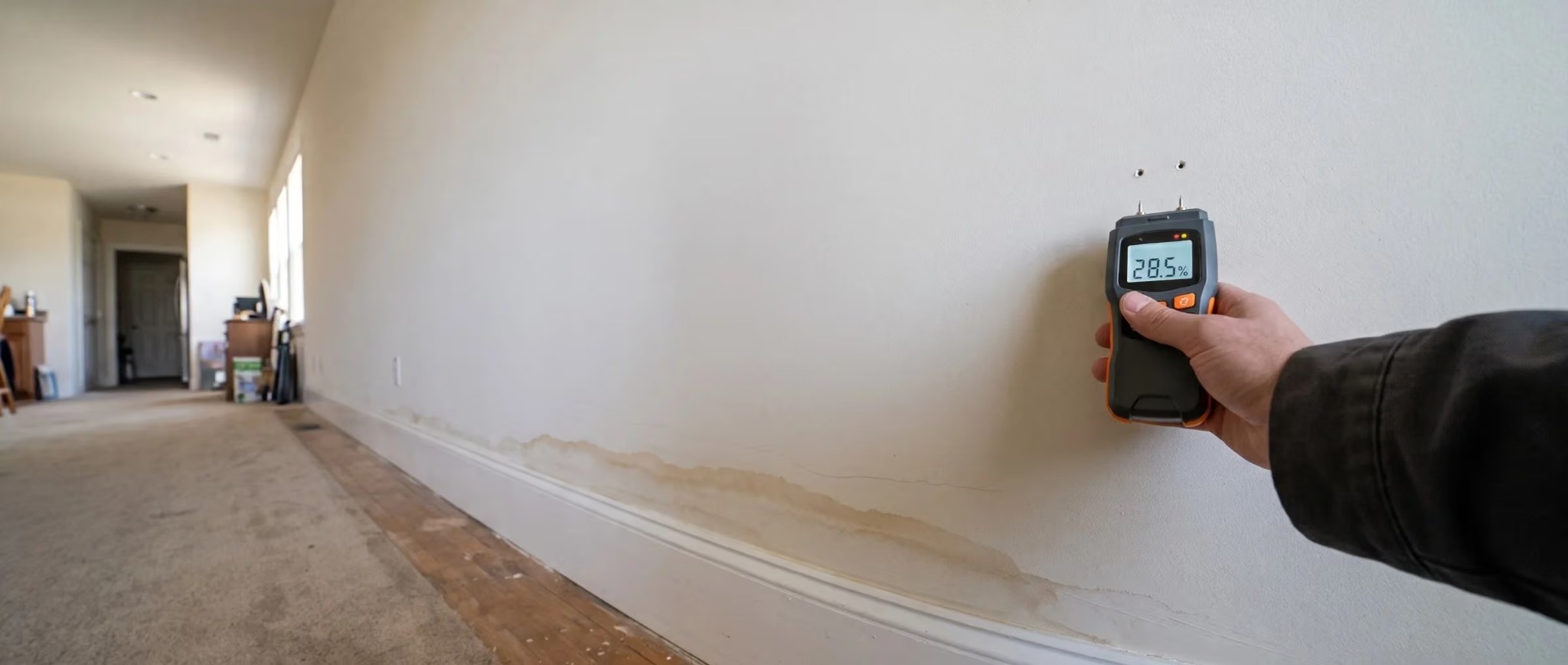
Investigate staining, peeling paint or swollen skirting after plumbing leaks or water entering from adjoining areas.
Wall moisture testing helps assess accessible surfaces. Enclosed spaces may require further investigation before the extent of the problem can be understood.
Carpets & underlay
Check concerns about moisture remaining beneath the carpet surface after an overflow, leak or flooding.
The water source and condition of the carpet, underlay and supporting floor influence the next step. Surface dryness alone is not a complete assessment.
Floors & subfloors
Assess accessible flooring and subfloor areas where a water incident has caused dampness, swelling or other changes.
Testing needs vary between flooring systems. Tell us if you are planning replacement flooring so any installer-specific requirements can be discussed before booking.
Drying progress
Use repeat readings to understand how affected materials are responding to a professional drying programme.
Follow-up checks help inform whether drying should continue, whether the approach needs adjustment or whether another moisture source deserves attention.
Concerned about a leak, damp patch or unfinished drying?
You do not need to wait for extensive visible damage before seeking advice. Moisture inspection may be useful after a known water incident or when a room develops changes that you cannot explain.
Tell us whether the problem appeared suddenly, has returned after repairs or changes following rain or appliance use. This background helps direct the assessment and identify whether another trade should also be involved.
A stain is a reason to investigate, not proof of a particular cause. Moisture testing and appropriate follow-up can help separate what is known from what still needs checking.
Common reasons to contact us
- Damp carpet following a burst pipe or appliance overflow.
- Water marks around ceilings, walls or skirting boards.
- Swelling, lifting or changes in timber flooring.
- Paint that is bubbling, peeling or discoloured.
- A persistent musty smell or recurring damp patch.
- Uncertainty about whether previous drying was sufficient.
Our emergency restoration assistance is available 24/7. For a larger water event, see our flood restoration service.
How a moisture assessment works
Useful readings need context. Our approach connects the measurements with the condition of your property and the decisions you need to make.
Before booking, explain whether you need an initial check, help after a recent leak or follow-up monitoring during restoration. Let us know if you require written findings for an owner, property manager or insurer.
The inspection considers the areas that can be assessed safely. Access limitations and any need for additional investigation should form part of the discussion.
Understand what happened
We discuss when the issue began, the suspected water source and which rooms were affected. Photographs and details of earlier repairs can help explain conditions that have changed since the incident.
Inspect accessible areas
The assessment considers visible damage, adjoining materials and safe access. Nearby room boundaries and floor edges may also need checking rather than focusing only on the most obvious wet patch.
Take appropriate readings
Moisture detection equipment is used within the agreed scope. The results are considered with the material type, equipment settings and suitable comparisons to help interpret the affected areas.
Explain what the findings mean
We discuss the areas needing attention, whether drying is appropriate and any remaining uncertainty. A plumber, roofer or other suitable trade may be needed to investigate or repair the source.
Plan drying or follow-up checks
Where restoration is needed, further work is based on the conditions found. Repeat checks during drying help assess progress and inform the next stage rather than relying on appearance or elapsed time alone.
What does a moisture reading actually mean?
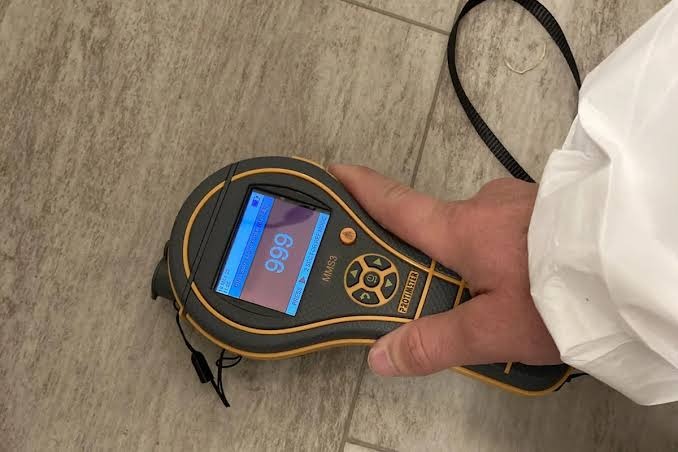
A meter display is one part of an assessment. The material, test method and surrounding evidence determine how the result should be interpreted.
There is no universal “dry” number
Moisture meters can use different scales. Some readings indicate moisture content; others provide a relative value for comparison. The same number should not be applied to every wall, floor and ceiling as a universal pass or fail.
A suitable baseline helps interpret comparative readings. Metal, material composition and equipment settings can affect results, so one unusually high reading needs investigation rather than an automatic conclusion.
Moisture mapping adds useful context
Moisture mapping records where readings are taken. During a drying job, returning to relevant locations makes it easier to compare conditions and identify areas that still need attention.
For example, a bedroom affected by a leak may need checks at the doorway, along a floor edge and beside the adjoining wall. Recording those locations supports a clearer comparison at later checks.
Thermal imaging supports investigation
Thermal imaging can highlight surface temperature patterns that warrant closer checks. It does not directly measure moisture content or establish the cause of a leak. Where suitable, it supports an assessment alongside moisture readings and other evidence.
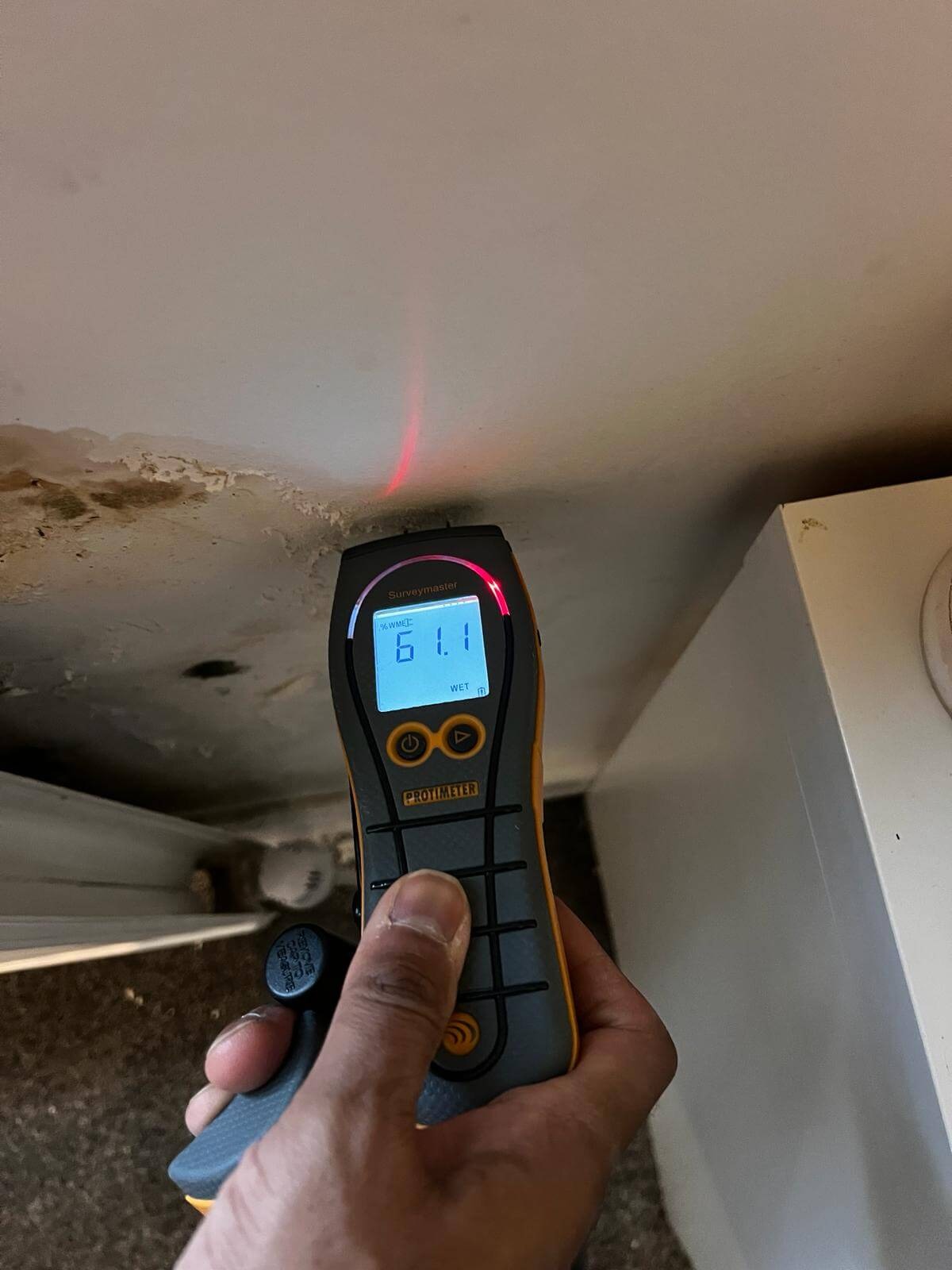
A low reading alone does not confirm that repairs can begin. The source of the problem, condition of the substrate and requirements of the coating or flooring system also matter. Discuss the findings with the contractor responsible for the repairs.
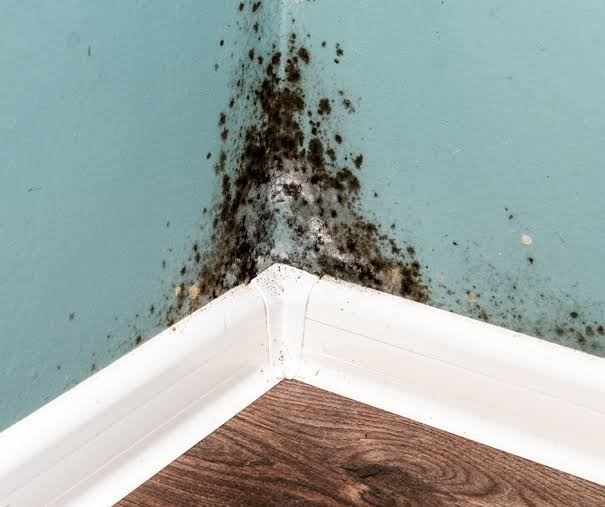
Address the moisture behind the problem
Persistent dampness and visible growth should be discussed when arranging an assessment. Cleaning or painting a surface does not resolve an ongoing source of unwanted moisture.
Moisture readings help assess damp conditions. They do not identify a mould species, measure airborne contamination or establish that a room is safe to occupy. Additional assessment may be needed depending on the circumstances.
If mould is already affecting your property, learn about our mould remediation services. Explain what you can see, how long it has been present and whether a leak or water incident occurred.
For independent information, the Victorian Department of Health’s flood recovery guidance includes resources on mould and returning to flood-affected properties.
Homes, rental properties & businesses
The purpose of an assessment is to help you make a practical decision. Tell us who needs the findings and what work is being considered so the scope can be discussed before the visit.
Homeowners
You may be deciding whether to organise drying, investigate a recurring stain or delay decorating. Explain what has happened and any work already completed. This helps us discuss whether a moisture assessment is an appropriate next step.
Where carpet is involved, its condition and the water source influence the available options. Our carpet drying service explains the broader approach to wet carpet restoration.
Landlords & property managers
Clear information is useful when tenants, owners and trades are involved. Provide the tenant’s observations, details of previous leaks and any available repair history. Tell us who will arrange access and who should receive the findings.
If your agency or insurer needs particular documentation, explain the requirements when booking. Coverage and evidence requirements remain a matter for the insurer.
Commercial premises
Water incidents can affect staff access, floor coverings, stock areas and daily operations. Let us know which spaces are affected, any access restrictions and whether the premises will remain occupied during assessment.
Moisture findings can help inform restoration planning. They do not replace other checks that may be needed before a workplace or damaged area returns to normal use.
Preparing for the visit
Gather photographs from the original incident, note when you first noticed the problem and have any contractor findings available. Explain entry arrangements and provide safe access to the rooms requiring assessment.
Do not remove finishes or disturb damaged materials simply to prepare for testing. Contact us first if you are unsure about access, particularly around damaged ceilings or enclosed spaces.
How much does moisture testing cost?
Pricing depends on the assessment scope, number of affected areas, access, documentation and any follow-up visits. A small area after a known leak differs from a multi-room investigation or ongoing drying programme.
What to include in your enquiry
Provide your suburb, the affected rooms, when the problem started and whether the suspected source has been repaired. Explain whether you need an initial assessment or a drying check so we can discuss the scope and quote appropriately.
Moisture readings across Geelong & nearby suburbs
We assist properties throughout Geelong and surrounding communities. Provide your location when you enquire so we can discuss availability and suitable arrangements. Explore our existing local cleaning and restoration pages below.
For enquiries across the Bellarine Peninsula and Surf Coast, including Ocean Grove, Barwon Heads, Drysdale and Torquay, contact our team to discuss your requirements.
View our full service-area coverageMoisture testing FAQs
Practical information before you arrange an assessment. Select a question to read the answer.
Testing requirements vary with the materials, access and purpose of the inspection.
Can a carpet feel dry while it is still damp underneath?
Yes. Surface condition does not necessarily describe the underlay or supporting floor. After a water incident, several layers and adjoining materials may need assessment. Tell us how the carpet became wet and what drying has already been attempted.
Can moisture readings locate the exact source of a leak?
Readings can help identify affected areas and guide investigation, but they do not always establish the exact source. Depending on the findings, a plumber, roofer or other appropriate trade may need to undertake further testing or repairs.
Will moisture testing damage my walls or floors?
It depends on the method and access required. Some checks use surface scanning; others may require probes or access to concealed areas. Discuss delicate finishes and other concerns when booking so the proposed approach can be explained.
How long does a moisture inspection take?
The duration depends on the number of rooms, accessibility and complexity of the problem. A single damp patch and a multi-room water event require different scopes. Describe the affected areas when you enquire so the likely arrangements can be discussed.
Can I use the findings for an insurance enquiry?
Assessment information may help explain the condition of affected materials. Discuss any documentation requirements before booking. Your insurer determines coverage and the evidence it requires; an inspection does not guarantee claim acceptance.
Does a low reading mean repairs can start?
Not automatically. A reading relates to a particular location, material and method at the time of testing. The moisture source, substrate condition and repair product requirements must also be considered before repainting or replacing floor coverings.
Can you check whether drying is progressing?
Moisture monitoring can help assess how suitable affected materials respond during restoration. Comparing relevant locations over time helps inform whether drying should continue or whether another area needs investigation. Discuss follow-up checks as part of the restoration scope.
Do you service suburbs outside central Geelong?
Yes. Our coverage includes surrounding Geelong suburbs and enquiries across the wider region. Let us know the property’s suburb, the issue and your access arrangements so we can discuss availability for your location.
Book a moisture assessment in Geelong
Concerned about damp walls, wet flooring or incomplete drying? Tell us what has happened and which areas are affected. Our local team can discuss your assessment and restoration needs.
info@rapiddryrestoration.com.auRapid Dry Restoration Geelong
50/58 Moorabool St
Geelong VIC 3220, Australia